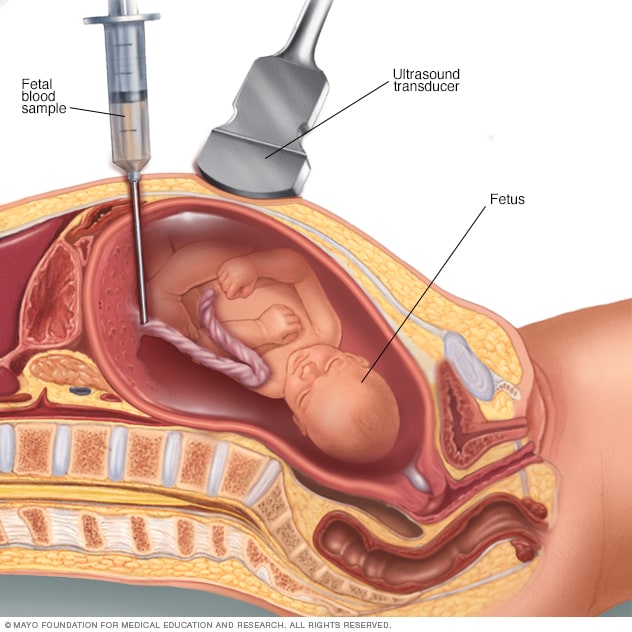
Percutaneous umbilical cord blood sampling (PUBS), also called cordocentesis, fetal blood sampling, or umbilical vein sampling is a diagnostic genetic test that examines blood from the fetal umbilical cord to detect fetal abnormalities. Cordocentesis, which is usually done after week 18 of pregnancy, can be used to detect certain genetic disorders, blood conditions and infections. Cordocentesis can also be used to deliver blood and medication to a baby through the umbilical cord. Use of cordocentesis is becoming rare because diagnostic procedures such as amniocentesis and chorionic villus sampling, which pose a lower risk of fetal death, can be used instead for prenatal diagnosis of disease. Cordocentesis is most often done to test for anemia in the baby.
For More Views: http://www.sciaeon.org/womens-health-and-complications/home
Article page: http://www.sciaeon.org/womens-health-and-complications/articles-in-press
Contribute your manuscript: http://www.sciaeon.org/submit-paper
For more queries: whc@sciaeonopenaccess.com

 Women's Health and Complications